About Me

My photo
Welcome to Heartstrings.Thanks for stopping by. I am a mother, a grandmother, and an author of historical western romance and contemporary romantic fiction. Ethan's Heart, book one of The Blackwood Brothers' series won the 2017 Maggie Award for Excellence. Book two, Escorting Darby Bloom, features Blackwood brother Isaac and will be released in December 2017. Stay tuned for more books in this series. If contemporaries are more your thing, check out Carly's Rule and Dusty's Fate. They are both Amazon Best-Sellers.

Sunday, March 25, 2012

Interview with Ruth Ryan Langan aka R.C. Ryan
New York Times Bestselling author


1.  What inspired you to write your first book?

I think there is a kind of arrogance in writers that makes us believe we can do better than the work currently being sold in bookstores.  Maybe that's a small part of it.  But the bigger part is this absolute need to write.  At least in my case, it was the driving force.  I simply had to try to write down the stories playing in my head.

2.  What or who has been the biggest influence in your writing career and why?

I'd say my family is the biggest influence.  I want my children and grandchildren to be proud of the work I do.  And there's my husband, who is my biggest fan.  From the beginning, when nobody actually believed that I could live my dream, he believed and supported me emotionally when I had to face those painful rejections.  In fact, he believed in me so completely that even when I was tempted to give up the dream, I couldn't because I knew he wanted it so badly for me.

3.  You have written nearly 100 novels, both historical and contemporary.  After that many books, how do you come up with the new story lines?

Coming up with fresh stories is never a problem for me.  There are more stories in my head than there is time to write them.  So time is my enemy, but coming up with fresh story ideas is the easy part.

4.  What is your writing schedule like?  For example, do you write any time of the day, or do you prefer a specific time of day?  Do you write for a specific number of hours or pages?

I'm a morning person.  Probably because I have 5 children, and my day always started early.  It's become my internal clock.  I walk with my husband first thing in the morning--a mile or two.  Shower, breakfast, and then I get to work.  On deadline, I can work 9 to 5, with a break for lunch or to fold laundry.  I have an office in my home, and that's the only place I work.  I never take my laptop out on the deck, or try to work while on vacation.  When I'm working, I work.  When I'm playing, I don't work.

5.  What is the most difficult or challenging part of the writing process for you?

I can't think of one thing that's more difficult than any other in the writing process.  Writing is difficult, but only because it requires so much discipline.  Once I sit at my computer, I'm at work and ready to stay there.  But often, it's difficult getting there.  So many distractions and interruptions.  It's called life.  It does get in the way.

6.  Do you ever experience writer's block?  If so, how do you cope with it? 

I don't experience it, and I don't believe in writer's block.  I just write until the story is told.  I once was a guest on a TV show with Robin Cook, and when I gave this response, he agreed, saying, as a doctor, he was never allowed to complain of having surgeon's block.  Not matter how difficult the operation, he had to see it through.

7.  Are you a plotter or a panster?  If you are a plotter, do you have any plotting tips to share?

I do have to give my editor a semblance of plot before we go to contract, but I consider myself a non-plotter.  I just let the characters write their story.  That way, I'm surprised as my readers as the story progresses.  When characters become real, they have a way of taking over the story and taking it in directions I never thought of.

8.  How long does it generally take you to finish a book?

As long as it takes to get it right.  Whether it takes 4 months or 6 months or a year, I'll take as long as I need to give my readers a great story.

9.  What is your personal writing goal?

To tell stories that my readers love so much, when the book ends, they're sorry to see it end and wish the story could go on just a little longer.  That, to me, is the sign of a good book.

10.  What is your current work-in-progress, and would you summarize it in a few lines?

I'm currently completing JAKE, book 3 in my current 3-book series for Grand Central Publishing entitled Wyoming Sky.  Three brothers living on the ranch of their father and grandfather.  Three generations living and working together, facing danger and passion as they meet the women who will forever change their lives.  Jake is a veterinarian who becomes involved with Meg, a hot-shot lawyer from Washington, D.C.  Meg has returned to Wyoming to dispose of her father's estate and becomes embroiled in danger.  Someone wants to drive her away and threatens her with death before she and Jake resolve the mystery and discover love.  The other two books in the series are QUINN, available now, and JOSH, which will be released in October, 2012, with JAKE due to be released in March 2013.  All are contemporary romantic-suspense, and all written under my pseudonym R.C. Ryan.

11.   Do you always love what you write?

I can't write it unless I absolutely love it.

12.  If you could choose anywhere in the world to write, where would it be?

I'm sure a lot of people would expect me to say "some tropical island, or a villa in the South of France."  But honestly, I'm living my dream.  I'm where I want to be, spending time with the people I love and doing what I'd always dreamed of doing.

13.  Describe your writing space, that one corner of the house that's all yours.

In our current home my office was planned in the pre-building stage, so it suits me perfectly.  Windows overlooking our neighborhood, which is now a golf course but was originally an apple orchard.  Our house overlooks a pond and the ninth fairway.  We have deer, foxes, coyotes and every kind of wildlife imaginable.  Three walls of custom-cabinets for my books and supplies.  A custom desk in the center of the room, with two computers, one for the Internet, the other not connected to the Internet so that it can't be contaminated by a virus while I work.  I work in silence.  No TV.  No music.  Just my characters, playing through my mind.

14.  What are you most proud of accomplishing in you life?  

My husband and I still love each other completely.  My family and this wonderful career still gives me such pleasure.

15.  What is the strangest thing that ever happened to you as a writer?  What is the funniest?

Early in my career, my publisher arranged for me to be on Good Morning America and later Phil Donahue and sent me around the country doing 'how to write romance' workshops at various public venues.  It was scary and exciting and certainly forced me to speak in public, something I'd never done as a wife and mother of five.  But being thrust into the public eye so early in my career certainly gave me a sense of confidence I couldn't have learned on my own.

16.  What would you consider the most important advice you could give a writer?

If you truly hunger after something, you will find a way to make it happen.  It takes discipline, determination and a very thick skin to succeed, but smart people find the way to make their dreams reality.  Write every day, in order to hone your craft.  Read everything.  Join a critique group or a writers' group.  Surround yourself with like-minded, supportive people.

BIO:

New York Times best-selling author Ruth Ryan Langan, who also writes as R. C. Ryan, has written more than 90 plus fiction novels, both contemporary and historical.  Quite an accomplishment for one who, after her fifth child started school, gave herself the gift of an hour a day to follow her dream to become a published author.

2012 will see two new novels by R.C. Ryan.  QUINN, Book 1 in her new Wyoming Sky series for Grand Central Publishing's Forever imprint features Quinn Conway, a rancher and naturalist who studies the life-cycle of wolves in their natural environment, meets strong-willed Cheyenne O'Brien, no stranger to tragedy.  When a series of dangerous accidents plague her, Quinn steps in to help, loses his heart.  To defeat a dangerous enemy, these two much put their cherished freedom, and their hearts, at risk.

In October, JOSH, book 2, will be released.  Josh Conway, rancher and expert climber, is asked to rescue Sierra Moor, lost somewhere in the grand Tetons.  Risking death at the hands of a dangerous adversary, these two join forces to survive, and find the greatest reward of all--love.

JAKE, Book 3, will be released March, 2013. 

Please click on the following link to visit Ruth's website:  Ruth Ryan Langan

Or visit her on facebook:  RC Ryan and Ruth Ryan Langan

Or on twitter:  Twitter

Ruth, thank you for an awesome interview!

Since this interview posted, Ruth's story, UNFORGIVEN, in the novella THE UNQUIET from Jove, is a finalist in the RWA RITA contest. Good luck, Ruth.

Friday, March 16, 2012


Interview with Cheryl Norman, Multi-published, Award-winning Romantic Suspense Author and Cookbook Author


1.  Tell us a little about yourself.

I am a happily married retiree living in the woods of North Florida, not far from the Suwannee River.  After successfully battling breast cancer in 2010, I reprioritized my life and retired from writing.  Or so I thought. Unfortunately, a writer never retires, so I still have projects.  However, I no longer sit for hours and hours at the computer.  I gave up my memberships to organizations that took up so much of my time.  But I still write when I'm not traveling in our mini-motor home.

2.  What inspired you to write your first book?

My first novel I wrote, which later became Running Scared (Medallion, 2008), began life as a story my running partner Marv Jones and I made up as we ran through the streets of Jacksonville to pass the time while we trained for a marathon ( I was younger and thinner then).  That one is the book of my heart.  Sadly, Marv passed away before he saw it in print.  I dedicated the book to his memory and gave a character his name.

3.  When you sold to an e-book publisher back in 2001, did you ever imagine then that e-readers would be as popular as they are now?

Yes, I did, but I knew it would be awhile.  It took big companies like Barnes and Noble, who bought out the online e-bookstore Fictionwise.com, and Amazon.com to standardize formats and popularize e-reading.

4.  You write romantic suspense, and you're a cookbook author.  Which is your favorite?

Romantic suspense is more fun to write.  I get to kill people!  Cookbooks are a lot of work and take months of kitchen-testing recipes.  But I enjoy both.  Currently, I am working on a new RV cookbook.

5.  Where do you come up with all your recipe ideas?

I love to watch cooking shows.  Even before there were Food Network and Cooking Channel, I watched programs about cooking and nutrition on PBS.  I never was much of a cook, but I wanted to learn and improve.  For the most part, though, these TV chefs use too much fat and sugar.  I started inventing healthier versions and soon had a cookbook's worth.

6.  Tell us about your cookbook, Recipes for Recovery?

I wrote Recipes for Recovery while recovering from chemotherapy and radiation treatments which left me weak and anemic.  So I reinvented many of my favorite recipes using convenience items to eliminate work and added ingredients to bump up the nutrition.  I self-published to keep the price down, intending it to help other patients who needed to cook for energy when they had not energy to cook.  Surprisingly, healthy people who don't want to spend time cooking healthy meals are buying the book.  So I guess I should have titled it something else, like "Cooking for Kitchen Phobics." LOL.

7.  What is your personal writing goal?

I feel a calling to write for the inspirational romantic suspense market.  I started a book during NaNoWriMo, working title Momma Cried, but have only six thousand words so far.  I need to do more plotting first.  NaNoWriMo is for people who can produce word count without editing.  That's not my preferred method of writing.  Perhaps if it were, I'd be more prolific.

8.  What is your current work-in-progress, and can you summarize it in a few lines?

Years ago and under a pen name, I wrote an erotic romance time-travel.  I'm rewriting and updating that story without the sex.  It's now called Running Out of Time and is a departure for me--no murder or sex.

When Stacy finds herself fifty years in the past, she enlists the help of a young GI, unaware that his future is tied directly to her time-jump.  Sgt. Bradley doesn't know if Stacy is a nutcase or a Soviet spy, but he does know he is in love with her.  Stacy soon discovers she must choose between her future . . . or his life.

9.  What is the strangest thing that ever happened to you while you were at a book signing or giving a presentation?  What is the funniest?

The strangest and funniest was the book signing at a historic inn, where the owner set me up in the garden a ta concrete umbrella table.  The shady garden quickly lost its charm when I was attacked by biting ants.  Huge biting ants!  Also it began to rain, but I had to stay put because the inn was locked.  The owner said she'd had a fire and couldn't let anyone inside until the renovations were complete.  That meant holding my bladder, too.  The umbrella under which I took refuge had dozens of holes.  I moved my books to the protection of my briefcase, but I got soaked.  Huge friendly cats seemed to want to sit in my lap.  I like cats, but these had dirty paws from the rain.  To add insult to injury, I didn't sell a single book!  But it made a funny story when I later shared it with my writing colleagues.

10.  Describe your writing space, that one corner of the house that's all yours.

I write in a spare bedroom that has more room now since I got rid of a thousand books.  After I converted to Kindle, I donated all but my keepers to nursing homes, libraries, and friends.  I moved in a sofa, so my space seems friendlier, too.  Beside my desk hangs a collage that my writing buddy, Judy Peters, made me one year for Christmas from photos of our various conference and writing events.


11.  What or who has been the biggest influence in your writing career and why?

Vicki Hinze
I've had so many influences, but I'd have to say Vicki Hinze.  I won a first chapter critique from her at a writing conference.  She gave me much more than my money's worth!  I credit her for helping me sell my first mass-market novel, Restore My Heart.  She gives writing instruction generously through her blogs and at conferences.  I'm a fan of her books, too.  She's a talented writer who teaches by example.

12.  What are you most proud of accomplishing?

Mastering the art of making gravy!  It's not that I had tried and failed; I'd never tried.  I just bought a jar of turkey gravy for Thanksgiving, or used condensed cream of chicken soup as chicken gravy.  Now I can whisk up gravy and sauces and I get compliments.  My mother-in-law is so impressed and tells everyone what a wonderful cook I am, all because I now can make gravy.

13.  What is the most important advice you could give another writer?

Patience.  Unless you're James Patterson or Nora Roberts, you aren't going to write a book and sell it this year with a release date in twelve months.  It takes critiques and feedback, rewrites and revisions, editing and more rewrites to polish a manuscript.  It took me seven years of writing before my first novel was released, and that's not unusual.

14.  Name 3 things you can't live without.

Things, not people, right?  I'd have to say my Vitamix® machine, my TreadClimber®, and my Kindle Fire.  The first two keep me healthy and the third keeps me happy.

Thank you, Cheryl for a great interview!  

Visit Cheryl at her Web site and the following links:  cherylnorman.com
Twitter 

BIO

Cheryl Norman earned a BA in English at Georgia State University in Atlanta. After a career in the telecommunications industry, she turned to fiction writing and won the 2003 EPPIE award for her contemporary romance, Last Resort.  Her debut with Medallion Press, Restore My Heart, led to a mention in Publisher's Weekly as one of ten new romance authors to watch. Running Scared, a romantic suspense set in Jacksonville, Florida, and Washington D.C., received a Perfect 10 from Romance Reviews Today. Reviewer Harriet Klausner calls her writing "Mindful of Linda Howard ... "

Cheryl has combined her passion for writing and healthful cooking by publishing three cookbooks. In addition to writing, Cheryl works with breast cancer survivors to raise awareness about early detection and treatment of the disease. She also helps writers with grammar via her Grammar Cop blog, newsletter articles, and workshops.

Her latest romantic suspense novel is Rebuild My World. The story stands alone but revisits characters from Reclaim My Life and Restore My Heart. She is currently revising a time-travel manuscript, a departure from her usual romantic suspense work.

Friday, March 9, 2012


Interview with BelleBooks/Bell Bridge Books' Debra Dixon, President/CEO and Deborah Smith, Vice President and Editorial Director.  

Meet these ladies in October at the 2012 Fiction Writers' Bootcamp sponsored by Ancient City Romance Authors.  For details, see the At The Event section of this blog site or the web address at the end of the interview.


Debra Dixon has published with major publishers, written ten books, contributed to twelve anthologies, and served as Vice President of RWA, and her popular GMC: Goal, Motivation, and Conflict workshop spawned a book that has become a how-to-bible for writers.

These days, she's better known as Publisher for BelleBooks and it's imprint Bell Bridge Books, which tackles a broad spectrum of genres in both print and ebook formats.  A 2011 company highlight was holding the #1 spot on the full Paid Kindle list for more than two weeks.  Their titles have been picked up in translation and by major New York publishers in subrights deals for mass market paperback, book club, audio and large print.  The company has published work from NYT's bestselling authors:  Anne Bishop, Susan Addison Allen, Deborah Smith, Sharon Sala, Sabrina Jeffries, Sandra Hill, Jill Marie Landis, and Jill Barnett.  As well as USA Today bestseller Kalayna Price.


Deborah Smith is the New York Times bestselling author (A Place to Call Home, 1997, Bantam Books) of more than 35 romance, fantasy, and women's fiction novels.  Her most recent success is The Crossroads Cafe, a Top 10 Amazon Kindle bestseller in ebook.  She is the winner of numerous awards including a career Achievement Award From Romantic Times Magazine.  A Place to Call Home was named one of the Top 200 Best Romance Novels of the 20th Century by Romantic Times.  More than 3 million copies of her books have been sold, worldwide.

Since 2000, Deborah Smith has been Vice President (and a founding partner of) BelleBooks (now primarily known as Bell Bridge Books.)  Based in Memphis, Tennessee, Bell Bridge Books is a successful small publishing company featuring popular fiction.  More than 25 Bell Bridge titles have been bestsellers in ebook.

1.  What is your bestselling genre right now?

We try not to lock into a "trending" mind-set.  We've seen that just about every genre can do well with the reading public.  So, we focus on finding great authors, who can write amazing books, and worrying about genre later.

2.  Is there something you don't currently have in publication that you would love to acquire?

We'd like to acquire more time in the day!

3.  Do you work with new/unpublished authors or prefer authors with a backlist?

We are primarily a publisher of original fiction.  That is our focus.  We publish original fiction every month.  But, because of the changes in the industry and the number of authors who now control their Big6 backlist, we have developed a large reprint "list."  We have a somewhat different approach to backlist management, which is why so many authors are working with us.  It's not about tossing the books up as fast as possible.  Our focus is on creating the right branding and packaging for the author as well as assessing the content for all the little fixes that might be necessary to freshen an older work.  We generally launch backlist as part of a complete publishing program, which includes originals by the author.

We have established relationships with the various ebook platforms and print distribution that most authors just can't duplicate.  That's not to say that authors can't be successful self-publishing.  This program is a different animal and well-suited to authors who like the collaboration of publishing and need to focus on creation of frontlist titles instead of managing or relaunching backlist themselves.

4.  What can an author do to impress you and set her/him apart from the rest?

Write a great book, concise query and readable synopsis.  Voice is critically important.  The voice has to be on the page from the opening.  Editors don't have time to "warm up" to an author's work.  The author has to engage us and make us sit up straight in amazement right from page one.

5.   What would you consider the most important advice or tip you could give an author on submitting to BelleBooks or Bell Bridge Books?

Be Patient.  Even though we're a small press, we gets lots of new queries every week.  It's impossible for us to respond to them immediately.  It may be 2-3 months before an author hears from us.

6.  Would you consider adding a genre or a time period that you do not currently work with and why?  (Examples:  Historical Western Romance, Victorian Romance, Colonial times, WW II, Erotic Romance.)

We never say never.  The only thing we don't actually anticipate publishing is erotica.  That has to do with erotica being a very well-served market.  A publisher our size can't be all things to all readers.  We have to pick and choose what we publish very carefully.

7.  What sets BelleBooks and Bell Bridge Books apart from other publishing houses?

Deborah Smith:  The founders and Managing Directors are all authors.  We try very hard to be more author-friendly than the bigger publishers.

Debra Dixon:  To our author-centric philosophy add our long time commitment to discoverability and the long tail.  We have author after author break into the Amazon Top 100 on the full paid list.  We're putting up great numbers for authors and finding readers.  Publishing is about building careers, building readership and we never lose sight of that fact.

8.  Once a book is accepted, how long before publication?

We operate within an 18 month window, which means that publication is usually within the same 12-18 month time frame that Big6 specifies.  Some books might publish a little faster, but most books these days are scheduled quite far out.  Books will have to go through a revision, line edit, copy edit, proofing, etc.

9.  What designates a title being selected for audio, and how many titles are selected per year?

Happily, due to our involvement with Audible.com, it is now possible for us to submit all of our titles for auditions.  The program works by connecting publishers and producers/narrators.  We sort through their auditions and, after consultation with the author, select a narrator for each book.  That producer/narrator is responsible for every aspect of recording.  The finished audio is sold via Audible, Amazon and iTunes.  As of March 2012, we have about 45 titles in production and about 10 released titles.

10.  How much say does an author have in selecting the audio reader? 

See above.  We send auditions to the authors and let them choose.

11.  What designates a title being published in hardback or large print?

We're always "working" the titles, selling into foreign translation or large print.  There is no pass/fail for whether a title gets the full court press.  We want to create as large a footprint as possible for our titles.  So we go after these types of "subrights" sales for every book.  However, in the case of an exceptionally long book, its chances at a large print deal are diminished due to the cost of producing that in large print.

12.  Do you accept submissions for short stories and anthologies?

These are invitation only, but we occasionally do short story collections.  We have one coming out in May 2012--SWEETER THAN TEA.  Some of the authors were from the open call.

13.   You have published several children's books.  Are you still acquiring?

Children's picture books and middle grade are specialized markets.  We are no longer acquiring in those categories unless we're continuing an existing series such as Bill Allen's "How To" fantasy series or Maureen Hardegree's "Haint" series.

14.  What trends do you see in publishing?  

Deborah Smith:  Continuing growth of ebooks and continuing decline of paperbacks.

Debra Dixon:  That's the big story--the rise of ebooks and the change in how readers find books.

16.  On a more personal note, what is your favorite thing to do in your spare time?

Deborah Smith:  Knitting.  Deb Dixon got me hooked last year at a conference.  Now, I'm rabid about it.

Debra Dixon:  I adore knitting and usually have a couple of projects going.  One project is always a pair of socks which is small and great for travel.  There's a waiting list for socks.  But the one thing that I must do regularly for my sanity is quilt.  I'm a rabid quilter.

17.  What is your favorite genre/type of book to read?  (Personal question, not publishing)

Debra Dixon:  Both DebS and I are very eclectic readers.  I tend to like a longer book that I can sink into versus a short breezy book.  Although it all depends on mood!

18.  Name three things you cannot live without.

Deborah Smith:  Husband Hank, our critters (two dogs, six cats, numerous goldfish) and Deb Dixon.  Seriously, we've informally adopted each other.

Deb Dixon:  She's taken my answer!  I'm very attached to my husband and son and Deb Smith.

19.  Since you are both writers, what advice can you give, one writer to another?

Deborah Smith:  Don't do it for the money.  You have to love writing and be happy doing it no matter how it pays off financially.  Publishing is a tough business.  Writers who love the craft and stick with it generally tend to achieve success.  Warning:  Writing is never going to be a get-rich-quick business, despite the "overnight success" stories that titillate writers occasionally.

Debra Dixon:  This is an amazing time to be a writer.  Success is created by "butt in chair."  Get better.  Write more.  Decide what success looks like, and spend the time to understand the business.  Writers have options, but not all options are created equal.  Getting published quickly isn't always the smart move.  Self-publishing isn't for everyone.  Big6 isn't for everyone or every book.  The "mid-major" publishers are different than small, boutique publishers.  Choices mean the author has to do some business planning and soul-searching about how to pursue this dream.


Thank you ladies for the great answers and advice.  Looking forward to meeting you both in October at the 2012 Fiction Writers' BootCamp.

If you are interested in reading more about BelleBooks and Bell Bridge Books, please click on the following link to visit the website.  www.bellebooks.com

If you are interested in meeting these awesome ladies, they will be the guest speakers and the editors for ACRA's 2012 Fiction Writers' Bootcamp.  This years' theme - "Mardi Gras on the Beach" held in St. Augustine, Florida, October 5 & 6, 2012.  Yes, it's Mardi Gras in October.   Please click on the Ancient City Romance Authors' website link for more information.   ACRARWA.COM

Don't miss this awesome opportunity to meet two of the founding members of BelleBooks/Bell Bridge Books.

Friday, February 24, 2012

   Interview with Sable Grace author of The Dark Breed Novels.  

Sable Grace is the writing team of Heather Waters (left) and Laura Barone (right).
 

 1.      Tell us a little about yourselves.

Heather:  I’m a mother to two amazing teens (oxymoron?) and wife to the best human being I’ve ever known.  Aside from that, I’ve been writing for a decade with 5 books published and one more due for release and one other under contract with Avon books.  After that, who knows?  Hopefully, a new Sable Grace series or continuation of the Dark Breed world . . . along with a few Heather Waters projects on the opposite spectrum of the romance genre!

Laura:  I’m a writer, wife, and mom.  I’ve been married for twenty-six years to my hero and best friend, have three daughters, and soon will have six tots—all under the age of six—to keep me busy.  My life is hectic, and there are those days I wish for someone’s more sedate life, but I’d get bored without the chaos, hugs, and sloppy kisses to interrupt my writing time.

2.       What inspired you to start writing?

Heather:  Reading.  I’ve been writing since elementary school but didn’t write my first novel till after my son was born in 1998.

Laura:  I really can’t remember a time when I didn’t write.  It started with devouring whatever book I could get my hands on and when I ran out of those, I’d make up my own stories to help fill the time.

3.   We know you are a writing team, but do you both write separately, under your own names, as well?  If so, what genre do each of you write on your own?

Heather:  Oy, that’s a loaded question.  I write everything.  Published under medieval romance with my own name for Berkley, but my current works include everything from suspense to women’s fiction.  What can I say?  I’m a genre slut!  They say write what you love to read and since I love to read everything, I’ve developed a sickness.

Laura:  I hope to publish under my own name, as well.  I write hot and steamy romances about best friends—and perfect strangers—who come together to finally find love.

4.       Tell us how your writing team works in order to complete a manuscript by the deadline?

Heather:  Usually, I come up with a schedule that will have us finished with the first semi-clean draft about a month before the deadline.  I write mornings and send to Laura around noon, and she sends back to me before bed with her pages added.

Laura:  We have an outline and a schedule so we know exactly what needs to be done and when.  Usually one of us takes the morning and the other the evening to get our pages done.  When time allows, we alternate writing days so we have time to work on individual projects at the same time as we’re working on a Sable Grace project.

5.       What or who has been the biggest influence in your writing career and why?
      
Heather:  Julie Garwood – for being the first to snatch me into the romance genre.  JK Rowling for holding my interest in books after I graduated high school and settled into the busy life of wife and mom.  And a few other special people who held my hand through the whole process, namely the owner of this blog, Vickie King.  She (YOU) were the first person to reach out to me and tell me I might be talented enough to go somewhere with this dream!

Vickie:  Ah, thanks, Heather.  I’m touched to hear that.

Laura:  All the greats who entertained me while growing up.  Those who managed to make a bad day not so bad and a great day even better.  I still remember the feeling of finishing a great book where the characters live with you years after you turn the last page.  That’s what I want to do.

6.       Where do you get your ideas?

Heather:  Thankfully, this has always been my strong point.  I don’t get them.  They’re just there.  I love to plot, to “what if” myself to sleep at night.  This is why I have far more projects on my plate than I can ever hope to complete.

Laura:  Everywhere and anywhere.  Music is a big one for me.  I hear a song and a verse just sticks with me and refuses to go away, until I’ve built an entire story around it.

7.       What is the most challenging part of the writing process for you?

Heather:  I didn’t know until working with our editor, Erika Tsang, that my weakness seems to be pacing.  I knew it always confused me, as long as I was interested, for me it was okay.  But working with Erika has really kicked my ass in this department.  The Sable Grace books are gogogogogogo and then when you’re out of breath, go some more.  I’m not used to that.

Laura:  Motivation is still a big one, though most times I find it now without anyone having to beat it into my head, but logic issues are a major challenge.  I have a great idea, but logically it doesn’t work—and Heather wants to beat her head against a firm surface, or perhaps mine, as we try to make that idea flow within the story.  Most of the time, we figure something out.  Sometimes, well, the great idea gets deleted or moved to another file to be used at a later date.

8.       How long does it take you to write a book?

Heather:  If I know where I’m going with a project, I can write a book in 2 months.  If I’m feeling my way through, it’s more like 4 or 5.  The Sable books were almost all written in 2-3 months (not counting revision time), but my own projects seem to go a little slower.  Probably because I refuse to write a synopsis until I’m ready to submit.

Laura:  That really depends on the story and the deadline.  Heather usually divides the months from the beginning of the project to the deadline and gives us time to write fresh, revise, and handle any other projects that come through at the same time.  I think the average is about five months from start of project to sending it out.

9.       What is your schedule like?  For example, do you write any time of the day or do you find a specific time of day works best for you?  Do you write a certain number of hours or pages?

Heather:  For me, I work whenever I want to.  Night, day, morning.  I have this luxury because my kids are in school full time and when they are home, they’re self-sufficient.  I can stop when they need me and pick right back up.  But when writing as Sable, I try to get my part done around the time Laura’s kiddos are going down for a nap so she has that time to get started after their bedtimes to finish.

Laura:  We have a schedule and a certain number of pages that have to be written each day.  When we write those pages is totally up to us.  I tend to procrastinate and spend way too much time on little people, so I’m writing my pages at night after everyone has gone to bed.  This isn’t always optimal, but I’ve learned to write well when my brain went to bed way before my body.

10.   Do you ever experience writer’s block?  If so, how do you cope with it?

Heather:  Not writer’s block, no.  What happens to me is I hit a plotting or logic block.  This can keep me away from my computer for a couple days while I try to figure it out.  Starting a new book is a whole other block.  I can’t get into a real groove until I know my story and have some idea of where I’m headed.

Laura:  I experience lazy-itis.  There are times when the stress I call my life tends to take over, and I get into a rut, where I feel like I’m in over my head and don’t know how to pull myself out of the hole I’ve fallen into.  Typically, a weekend away with some chit-chat and more than a few adult beverages clears the fog and lets me get my focus back.  If I can’t get away, then really long phone calls will work in a pinch.

11.   Are you a plotter or a pantster?  If you’re a plotter, do you have any plotting tips to share with other writers?

Heather:   I’m a pantster by nature but had to become a plotter working with another writer.  We BOTH have to be on the same train so to speak.  And no, I have no tips.  All I do is “what  if” myself into circles until I find something that clicks and no more logic issues get in my way.  If I can get a synopsis done, I do like to break it into scenes and use something like One Note or Scivener to separate/label each scene, so I can write out of order sometimes.  But usually after I get whatever scene’s bugging me out of my head, I go back to chronological writing order.

Laura:  I’m not so much a plotter—which is one of the areas I’m really trying to work on.  I like to use the “W” plot or a version of the Three Act outline.  I typically know the characters and what their strengths and problems are and the situation they will have to overcome, so I jot down any scenes I can think of to move the story from the first meeting to the black moment.  There are huge holes that need to be filled in, but I have enough to make a story and all the gaps are bridged as I write the story.

12.   What is your personal writing goal?

Heather:  If I could just be self-sufficient enough to do this as a full-time career and be able to support my family doing what I love, should I ever need to, then my dreams will have come true.

Laura:  To place some Laura books on my shelf next to my Sable Grace books.  I’d like to be able to supplement our income enough so that my husband can quit the job he hates and do something that he loves as much as I do.  He’s always supported me and my dreams and to be able to give a little of that back to him would really make my dreams complete. 

 13.  If you could choose anywhere in the world to write, where would it be and why?

Heather:  I love the idea of sitting in my bed in the dark and typing away, but I think that would keep my hubby awake, so I’ve never tried.  I guess fantasy-wise, I’d love to be outside on a deck in the mountains overlooking a lake or right on the beach where I can hear the waves yet keep my keys free of sand.

Laura:  I’d love to have a little cabin in the mountains, a huge porch for daydreaming, and an enormous view and the sounds to of nature to keep me company as I write.

14.   What is the strangest thing that ever happened to you at a book signing, conference, workshop, or as a writer in general.  What is the funniest? 

Heather:  The strangest would have to be sitting at my very first signing at RWA conference and experiencing them opening the doors and the cattle stampede that cleaned me out of books in less than 15 minutes!  I don’t really have any funny moments, but I will say that in Bedeviled, we had a pair of boots that we edited out of the story and . . . forgot to keep editing.  Our editor found that, thankfully, and asked us how those boots kept reappearing over and over.

15.   What are you most proud of accomplishing in your life? 

Heather:  Cliché, I know, but my kids and my marriage make me the proudest.  Everyone thinks they have the best family, but I really do.  LOL.

Laura:  Stepping outside the box I’d placed myself in and being free to try new things, both in my own writing and in our partnership.  I think the joy over finishing a manuscript in a new genre that I’d never attempted before is as high on the scale as selling Ascension.

16.   Describe your writing space, the one corner of the house or office that’s all yours?

Heather: Check out the photo of Heather's writing space.


Laura:  Wow, I’m not sure I have found that space, yet.  I spent a lot of years writing in the dining room.  Now, I have an office, but I share it with a toddler.  I tend to spend a lot of time working on the laptop in the living room or on the back patio so I can keep an eye on the little people.

17.   What writing tips or advice would you like to give other writers?

Heather:  It only takes one yes.  Don’t quit till you find it.

Laura:  Never, ever give up on your dreams and don’t ever buy into the bull others feed you about not being good enough or talented enough to achieve your goals.  These are your dreams and only you can chase them through the stars.

Thanks Heather and Laura aka Sable Grace.  To access their website, please click on the following link.    Sable Grace

Sunday, February 19, 2012

Where do you write?

Ever wonder where an author writes?  Me, too, and that's why I've decided to bring you photos of different authors' writing spaces.  That one corner they call their own.  If you'd like to include your writing corner, let me know.  I'd love to share it.  Click on  A Writers' Corner to see the photos.  More writers' spaces will be going up soon, so come back and take a look.

Saturday, February 18, 2012


Interview with New York Times Bestselling author, Sharon Sala


1.  Tell us a little about yourself?  

I am a native of Oklahoma in more ways than one.  My fraternal great-grandmother was Cherokee.  Family is the most important thing in my world.  I was a farmer's daughter and then a farmer's wife for over 31 years before I divorced.  I now live in a city, but miss country life a lot.

2.  What inspired you to write your first book?

It was a job I hated--grocery checker in our local supermarket.  Hated the late hours being away from my family.  Came in late one night from work, pulled a typewriter out of the closet and started writing a story that had been in my head.  It was that bizarre, I kid you not.  I was convinced there had to be a better way to make a living than the job I had and the small town near where I was living had no better opportunities.

3.  What or who has been the biggest influence in your writing career and why?

The  biggest influence in my life with regard to writing was not a person.  It was a need to find a way to share the stories I dreamed.  Almost all of the books I've had published were dreams first.  In color.  With dialogue.  It's like going to the movies when I sleep.  I dream it.  I wake up and write it.  And whoever reads one of my books is reading one of my dreams.

4.  After a long career with big name publishers and being on some of the biggest lists with your novels, like the New York Times Bestseller list and USA Today, just to mention a couple, what made you decide to self-publish A Field of Poppies?

I didn't start out with the intent to self-publish A Field of Poppies.  But it was Women's Fiction, which is not the genre in which I'd become known.  The big publishers read it and one in particular love it.  Wanted to buy it.  I waited for the holidays to pass and then negotiations would begin.  I even got an e-mail from the editor saying how much she LOVED the story.  They had their meeting.  They all loved it.  And then at the last minute changed their mind.  Which was fine.  But it was the reason that made me so angry.  They wanted a guarantee it would sell and didn't think my readers would follow me to a new genre.  It floored me.  Since when has a publisher EVER had a guarantee that a book would sell?  And if twenty years of readership isn't enough, then what is.

I told my agent to pull it.  I refused to submit it anywhere else and well, here I am, the author of my first self-published book.  And by the way, it's doing quite nicely, thank you very much.  It's been in the top 100 Kindle sales on Amazon.com since the fourth day of its release.  It's available in print from Amazon.com and on Kindle and Nook.  And yes, I will do more.

5.  What is your current work-in-progress and can you summarize it in a few lines?

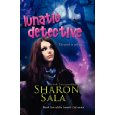
The book I'm working on now is actually the third book in my Lunatic series, which are the YA books I'm doing with Belle Books.  My Lunatic Life and Lunatic Detective are already out.  I'm writing Lunatic Revenge.  They're about a teenage girl who's a psychic and a medium.  She lives with her uncle and two ghosts who've helped raise her.  Remember that TV show Medium?  Think Medium meets Nancy Drew.

6.  What is your writing schedule like?  For example, do you write any time of the day or do you prefer a specific time of day?  Do you write for a set amount of hours or pages?

My writing schedule is a thing of the past since I moved my 92 year old mother in with me six years ago.  She has dementia and no short-term memory so every day brings new challenges, but also new joys.  We find far more things to laugh about than we do bemoan.  The only way to get through this for the both of us is without making anything a big deal.  I write when I can, which often means staying up until 1:00 a.m. to finish a chapter undeterred.  Then I'm up early the next day with her.  It's sort of like when my kids were little.  Seriously.  Only the two-year-old is 92.  Otherwise, the behaviors are a lot alike.  I'm smiling here because I love her so much and our life now is just as mine began . . . with her.

7.  How long does it take you to finish a book?

Until it's done, and that's the truth.  I keep an eye on the deadline and just keep writing.

8.  What is the most difficult or challenging part of the writing process for you?

I've already mentioned it.  At this point in my life, it's finding the time to write.  (see answer 6)

9.  Do you ever experience writers block?  If so, how do you cope with it?

I do not have the luxury of a writer's block.  I have a mortgage.  Seriously.  That's all the impetus I need to sit my backside down and get to work.  And remember, I'm not "making it up" as I go along.  I've already dreamed it.  All I have to do is write it down.

10.  Are you a plotter or a panster?  If you're a plotter, do you have any plotting tips to share?

I plot because publishers require a synopsis.  But once written, I rarely refer to it again, which is probably horrifying for a publisher to know.  The deal is, if you're letting the characters tell the story to you, it's far easier than trying to tell them what to do.  That's when a writer gets stuck in the story, because they're trying to force a character into something or into a situation that doesn't fit their personality or the story.  At least that's been my experience.

11.  What is your personal writing goal?

Hmm, I suppose professionally, it would be to meet deadlines.  Personally, it would be to have my books made into movies because I am a visual writer.  I "see" the scene as I'm writing the book, and to "see" it on film as I see when I'm writing would be a dream come true for me.

12.  If you could choose anywhere in the world to write, where would it be?

As a favorite country song of mine goes . . . "I'm already there."  It would be home.

13.  Describe your writing space, that one corner of the house that is all yours?

I live in an old ranch-style house that sprawls out over nearly 3/4 of an acre in the middle of the city and the only place in that entire house that is specifically mine is my bedroom.  And I would never write there.  That's where the dreams are.  I would never take work there.  My kitchen is huge.  There's an old sectional sofa with a built-in recliner at one end of the kitchen.  That's where I write on my laptop.  That way I'm in the middle of the house, able to see what my mother needs or is doing at any time.  I can keep an eye on laundry and cooking and even an update from the TV there while I write, and yes, I've learned to multitask when I write.  Before I thought I needed quiet to write.  I have since learned that is not the case.  And by the way, I'm laughing here, as well.

14.  What are you most proud of accomplishing in your life?

Career-wise, being the 2011 recipient of the Nora Roberts Lifetime Achievement Award given by Romance Writers of America.  Personally, raising two of the best kids a mother could ever hope to have, who have given me amazing grandchildren and the assurance that I did the right thing when it counted most.

15.  What is the strangest thing that ever happened to you at a workshop, presentation, book signing or conference?  What is the funniest?

The strangest thing that ever happened at a book signing was having a woman come up to me and whisper in my ear that she had ties to the mob and was I interested in writing her story and splitting it with her, 50/50.  That's also the funniest.  I hope to God I have more sense than to mess with the mod or do all the work and give half of it away to a total stranger.  And, FYI, I'm really laughing as I typed this answer.

16.  Where do you get your story ideas?

As I have stated before, I dream almost all of them.  The ones I don't are usually triggered by something I see or read.  It sets a whole train of thought into action that usually results in a book.

17.  What made you branch out into young adult?

This is an easy answer.  I have 9 grandchildren, 6 of whom are girls.  They had begged for years for me to write something they could read.  So I did.  And I even set the YA series in a real-life Oklahoma town--Stillwater, Oklahoma--home of Oklahoma State University, which is my son's alma-mater.

18.  What would you consider the most important advice you could give a writer?

If you're just beginning, or are considering becoming a writer, the most valuable advice I can give you is to join a writer's group--one that is organized enough to give you valuable info as to current markets, that would provide you with access to critique groups, and to write and not be afraid to edit or delete.

For writers who've been in the business a while and are published, I would remind them that this business changes as rapidly as a baby needing a diaper change.  You have to be ready to roll with it.  Just because you're successful in one aspect does not mean that avenue will always be there.  If you don't evolve as a writer, your career will eventually dissolve.

Thank you, Sharon.  If you would like to visit Sharon's website, please click on the following link:

Sharon Sala

Saturday, February 11, 2012

Interview with Vicki Hinze, award-winning, multi-published author and lecturer.


 1.  Tell us a little about yourself.

I'm a wife, mom and grandmother who loves all things writing.

2.  What inspired you to write your first book?

Both my mom and dad loved to read.  I started doing political essays--it was a game with my dad--very early on.  Later, I wrote poetry, but I learned quickly, I need room to stretch.  I wrote a couple short stories but required more than stretching room, I needed the space to sprawl.  So I tried a novel.  Hubby, who was military, had already moved to what would become our new home.  I was working full time (Director of Operations for a corporate chain) and the kids were with me finishing out the school year--it was the worst possible time to take on a big project like a novel, so of course, that's exactly when I did it.  Novels fit perfectly.  I wrote one, and then another and another . . . and I just haven't stopped.


 3.  You've written in many different sub-genres of romance, including contemporary romance, romantic suspense, and paranormal romance, not to forget the inspirational and technical books.  Of all that you have written, do you have a favorite genre or sub-genre?

I have written a lot of different types of novels.  I love genre-blending and blazing trails.  The most sure-fire way to get me to try something "different" is to tell me it can't be done.  Then I've just got to go for it.  As far as a favorite genre, I hesitate to name one.  I love suspense, mystery and a little romance in a book.  I love books that inspire.  So all my books regardless of what genre they're in, or including those not classified in a genre, have those things in common.  I can't say suspense or mystery or thriller or romance is my favorite.  It takes them all, and I'm not picky about which one the story focuses intensely on.  Sometimes it's the thriller element.  Sometimes it's the suspense.  Sometimes it's the romance.  So long as a book is well done with all those elements, I'm happy.  Guess that means my favorite is the "suspense and mystery and thriller and romance" genre where the stories heal the broken and inspire.  Whew, that's long-winded, but it is accurate.

4.  What or who has been the biggest influence in your writing career and why?

Many have had strong influences on me.  My mother.  She loved books, and encouraged me ceaselessly in writing.  Steadfast support.  That was priceless.  Nina Coombs-Pyakarre mentored me, and still today I ask myself what she'd think about this or that in my books.  If what I've done is up to her standards.  (Nina bled red ink on many a page for me for a very long time.  She was hard but fair and never permitted good enough to be good enough.)

Along the road, there have been many others.  Many, many others, and I'm grateful to each and every one of them.

5.  What is the most difficult or challenging part of the writing process for you?

Coloring between the lines.  I like many different kinds of books and I want to write--and have written--many different types of books.  That's frustrating to editors who need the same kind of book only different rather than different and different and different.  I can do that--write the same kind of book--I've just chosen not to do it very often.  I love the challenge of blazing trails and trying different kinds of books to see if I can do them.  Totally love that.  It's not the easiest way to build a career, but I wasn't and still am not just interested in building a career, I'm interested in building a life.  Writing is a huge part of my life--very important to me.  To live that life well, I can't color within the lines all the time.  It just doesn't work for me that way.  So I go where I'm drawn to go and do what I'm drawn to do and hope for the best.  :-)

6.  What is your writing schedule like?  For example, do you write any time of the day or do you prefer a specific time of day?  Do you write for a specific amount of hours or a set amount of pages?

I have written all those ways.  When the kids were small and still home, I had to be extremely disciplined about writing time.  I'd get up at o'dark thirty and write for an hour or two before getting the kids up and off to school and leaving for work.  Then after dinner and homework and getting them down for the night, I'd write some more.  Now my schedule on writing is more relaxed.  It depends on where I am in the story.  If fevered, I work until I fall asleep at the computer.  If not, I try to get fevered.  It makes for the best stories.  The long and short of it is that I schedule deadlines out far enough that I'm generally done way before deadlines.  Occasionally something will happen that pushes me against the wall on them, but then I just buckle down and get the book written.  If that means writing nearly around the clock, then that's what it means.  (I hate the idea of being late.  To me, it's just rude to mess up other people's schedules unless it absolutely cannot be avoided.)

7.  How long does it take you to finish a book?

It depends on the book.  Some are very quick--a month, maybe two.  Others are  years.  The fastest I've written one start to finish is two weeks.  The longest--well, I've rewritten one five times and I still don't like it.  The vision in my head doesn't match that on paper.  I first wrote it in 1995.  I'll let you know when it's finally done.  On an average, four to five months is good.  But it truly depends on the book and the vision for it.  If it's clear and comes full blown, it's fast.  If it's nebulous and murky, it takes longer.  You can't predict, book to book.  Or I can't.  What I can say is that it takes what it takes to get it the best you can make it at that time.

8.  Do you ever experience writer's block?  If so, how do you cope with it?

I haven't, but I've only been writing a little over two decades, so it might be it just hasn't hit me yet.  I know it's real, it happens.  I know writers who have suffered horribly.  But for me the challenge is an abundance of stories I want to write, need to write, must write.  I have the opposite of writer's block.  It can be a mess too, because you must focus and be disciplined to get things done.

I think the reason I've avoided block thus far is I'm constantly refilling the creative well.  I love people.  Love to study them, watch them, listen to them, figure out what makes them tick, what ticks them off, what fires them up, leaves them cold.  I am into issues and anything to do with healing.  I love science and history and so many other things.  It's all so interesting.  I have to work at it to cap my creative well long enough to hang onto thought and ideas that pertain to the book at hand.

9.  Are you a plotter or panster?  If you're a plotter, do you have any plotting tips?

I'm both.  For a long time, I plotted.  I was writing in spurts and it was hard to recall what happened when and details.  So by using a plot board--squares on a page where each square is a scene in a chapter--it made spurt writing easier.  I spent much less time reviewing what I'd already written.  That was helpful and a great time-saver.  I've also written books where I had no idea what would happen next.  I had to write to find out.  Those are fun.  Again, it depends on the book and what is going on in my life.  I rarely get to write one book at a time.  That makes plotting helpful.

A great tip, in my opinion, is to respect the way your mind works and use whatever methods are in harmony with it.  To some, plotting equates to the story being done.  The desire to write the story diminishes because the writer knows what is going to happen.  That's not good.  So play panster.  If you write yourself into brick walls and end up spending more time rewriting than writing, try playing plotter.  You'll see which works best for you--and it might be a combination of the two that's your perfect fit.

10.  What is your personal writing goal?

My personal writing goal is to create healing books that inspire and lift up people who are struggling or broken.  To show them through the characters and stories that no matter how hard times get, we get through them, and there's a lot of good life on the other side of challenges.

11.  If you could choose anywhere in the world to write, where would it be? 

The beach.  Course, I go there and get caught up in the horizon and the sounds of the surf, which is great for dreaming but might not be conducive to . . . yes, the beach.  It's my favorite place.

12.  Describe your writing space, that one corner of the house that is all yours?

My office was the entire upstairs until I fell down the stairs.  Now I'm in a bedroom on the lower floor and never go upstairs, which is great but the office is not half as big as the old one, so it's messy in here.  There are two desks, two book cases, two file cabinets, two chairs, another shelf, another two cabinets and stacks.  All kinds of stacks.  Books.  Books waiting for endorsements.  Manuscripts.  Partials.  I can't see what else.  My computer screen is big and blocks the view--and I like it that way.  My book covers are framed and on the wall.  I have a collection of sayings and tapestries and goodies that are inspiring and religious in nature above and around an altar, which is a sacred space in my office.  On its top are several items of importance to me.  One is a compass.  So I never lose my way.  In the corner beside the altar is a pot with sticks in it that the grandkids gifted to me.  Little branches.  I hang ornaments of angels on them.  I've always called the grans my angels.  Mmm, and more stacks.  :-)  Lots and lots of those!

13.  What are you most proud of accomplishing in your life?

Boy, I don't know.  Raising the kids, definitely.  My goal was to get all three through college where they started their adult lives with no debt.  I'm thrilled about that, but they did the work.  I'm very proud of my family and I have enormous respect for the kids.  That's a lovely thing.  But again, that's the people they chose to be, not really my accomplishment.

 I think one of the highlights of my life was putting the first copy of my first book in my mother's hands.  She shook she was so excited.  And when she read the dedication, she burst into tears.  That was an amazing moment.  I've told you how much she loved books and how supportive she always was of me writing.  To give that to her meant the world to me.

14.  What is your current work-in-progress, and can you summarize it in a few lines?

Well, there are two Lost, Inc. books.  That's a new series I'm doing for Love Inspired Suspense that debuts next October with SURVIVE THE NIGHT.  I'm editing the second one, CHRISTMAS COUNTDOWN, and writing the third, TORN LOYALTIES.  These all center around a small agency helping the lost find their way home.

I'm also finishing up a Kali Kaye book, GIRL TALK: LETTERS BETWEEN FRIENDS, I'll be publishing very soon.  It's different--hence the Kali Kaye name so readers know to expect a different type of story.

I'm writing a proposal for a new series that is a departure for me but one that captivated me in the research phase.  I planned to wait a year, but I got too invested so I have to write them sooner.

And I've just begun the first book in another series that is Christian fiction also.  It's kind of an exploratory project.  I love the idea of the story.  Now I have to see if I'll love the book.  If so, I'll write it.  Have to write some to know.

15.   I know you've written many technical writing books, but what you consider the most important advice you could give a writer?  If you want, you can break this into advice to beginning writers and advice to advanced.

MOST IMPORTANT ADVICE:

Never write a book you don't love.  Your time is your life.  If you invest it in a book, you should love it.  That love shows in the work in a thousand ways, and if it's missing, that shows, too.

BEGINNING WRITERS:

Know your purpose for writing and then view everything you do professionally through the prism of that purpose.  Will this (whatever this is) enhance or detract from  your purpose?  Only invest in that which enhances your purpose.

ADVANCED WRITERS:

Adopt "the best" as your mantra and do everything within your power to never settle for less.  Good enough is never good enough.

ALL:

Much in the business of writing is out of your control.  Accept that.  Know how the business works, and be content controlling what you can:  the quality of the work.  On quality do not compromise.

Thank you, Vicki.  If you'd like to visit Vicki Hinze's website, click on the following link.

Vicki Hinze